NEWSLETTER-September
Updated: Sep 1

Welcome to Fall at Small House
There's a particular kind of magic that arrives with fall. The light turns gold before it goes, the air asks us to slow down, and inside Small House, this is the season we lean all the way in. It's when the ideas we've been holding since spring start to take shape, when new voices find their way to our door, and when the work of building a story, a stage, a community feels most alive.
This year, fall at Small House is about intentional growth. We're expanding the rooms in this house: more creatives at the table, more stories getting told, more spaces where you can come exactly as you are and be met with imagination instead of judgment. Whether you've been with us since the beginning or you're just now stepping inside, we're glad you're here.
Grab something warm, get cozy, and let's walk through what's ahead.
What's Happening in the House

Thursdays Together — September through November — Every Thursday from 4–8 PM, pull up a seat with us at Braid Mill for free coffee, easy conversation, and creative company. Bring a manuscript you're wrestling with, a character who won't sit still, or just yourself and the need to be around people who get it. There's no agenda — some weeks it's brainstorming out loud, some weeks it's quiet, heads-down work side by side. However you show up, you're welcome. It's the perfect way to build connections with our Small House family — just RSVP so we know to save you a seat.

FEATURING EMANI PARKS
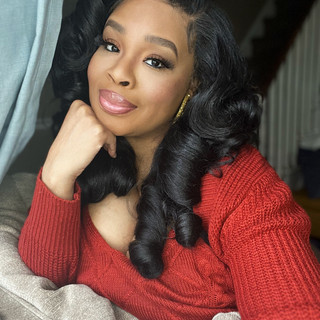
Emani Jhané Parks was born on February 8, 1995, in Philadelphia, PA, into a family deeply rooted in education and cultural heritage. She attended Imani Education Circle Charter School, a school founded by her grandmother in 1999 and named after her. Her grandmother’s vision extended beyond the United States when she established Imani Charter School in Gambia, Africa, in 2015. This legacy profoundly influenced Emani and shaped her understanding of her roots.

The Founder's Room: On Showing Up in Every Room You Enter
Recently our team walked into a grant writing and sponsorship workshop, and I watched something happen that I haven't been able to stop thinking about since.
It wasn't flashy. It was a room full of folding chairs, pretzels and juice on the table, and people from a dozen organizations learning how to ask for money in a way that actually works. In the middle of it, my team sat up straight, asked sharp questions, and represented Small House like they knew exactly who they were and why they'd been invited.
I was proud. Genuinely, unexpectedly proud, the way you get when you watch people you believe in prove you right. And underneath it was a recognition: how rare it is for a person, or a team, to walk into a room already grounded in who they are, what they do, and who they're there to serve. Most of us are taught to walk in hoping to be liked, hoping to be understood, hoping not to be found out. We are rarely taught to walk in already sure.
That workshop reminded me of something I've had to learn the hard way, over and over, as a founder: how you show up in a room is not a small thing. It is strategy, leadership, and the difference between being remembered as someone who was simply present and someone whose presence mattered.
The Room Is Always Watching
There is no neutral room. Every space you enter- a boardroom, a workshop, a stage- is quietly asking a question before you've said a word: who are you, and why does that matter here? Most people answer that question by accident, letting their nerves or their need to be liked decide for them. Rooms remember uncertainty as clearly as they remember confidence.
I think about this constantly as the founder of Small House. Every grant meeting, every partnership conversation, every stage we step onto as a company is a room deciding, often in the first few minutes, whether we're worth investing in, collaborating with, trusting with a story. That decision is rarely made on our slide deck or our numbers alone. It's made on how grounded we are while we're standing there.
Showing up well isn't about being the loudest person in the room, or having the most polish or the most credentials. It's walking in with your feet already planted, knowing exactly who you are before the room has a chance to define it for you.
Be Sure of Who You Are
The first thing I carry into every room, and hope my team carries too, is a settled sense of identity: not a title, but a belief I won't negotiate away just to be more palatable.
For Small House, that means walking in as an organization built on the belief that storytelling is both an art form and a healing practice, unapologetically here to create space for Black creatives to feel safe enough to imagine out loud. That belief doesn't get left at the door. It's not a marketing angle. It's who we actually are.
Being sure of who you are doesn't mean being closed off to learning. The team that sat in that workshop asking sharp questions wasn't performing confidence. They were secure enough to actually be curious. When you're unsure of your identity, curiosity feels dangerous. When you're sure of it, curiosity is just how you get better.
Be Sure of What You Do
The second thing is clarity of purpose: a specific, sayable answer to what we actually do, and why it works. Mission-driven founders, myself included in earlier years, tend to talk in feelings instead of function. “We tell stories that matter” isn't enough. Grant makers and sponsors don't fund vibes; they fund outcomes.
That precision isn't the opposite of soul. It's what protects it. When you know precisely what you do, you stop needing to inflate it or shape-shift it depending on who's in the room. That's what I watched my team do. They didn't oversell Small House or undersell it. They described what we build (in publishing, in production, in the spaces we hold for creatives) with a plain confidence that comes from actually believing in it.
Be Sure of Who You're Here to Serve
The third thing, and the one I hold most closely, is knowing exactly who you're there to serve. Not “everyone.” A real answer, with real names behind it.
For Small House, that's Black creatives building work across publishing, theatre, film, and children's media. It's the indie author who needs someone to believe in their book before the industry does. It's the actor who's been told, in a hundred small ways, that there isn't room for their story. It's the child who deserves to open a book or watch a stage and see someone who looks like them treated as magic, not an exception.
When you're sure of who you're serving, every room becomes less about you and more about them. That's what made me proudest watching my team. They weren't there for themselves. Every grant we learn to write is resources that go straight back to the creatives and community Small House exists to serve.
Presence Is a Practice
None of this comes naturally, not to me, not to most people. It's a practice, built room by room, the same way you'd build any other skill. Early in my journey, I showed up small in plenty of rooms, hoping to be validated, over-explaining a mission I wasn't yet sure others would believe I had earned. Every founder I respect has a version of that story. The difference between the founders who grow and the ones who stall isn't that one group figured out presence overnight. It's that one group kept practicing it, room after room, until it became instinct instead of effort.
That's what I want for my team, and for this community reading along with us. Not perfection. Not a version of confidence that never wavers. Just practice. Every room (a workshop, a meeting, a stage, a hard conversation) is another rep.
So if you're building something of your own (a business, a creative practice, a life you're proud of), I'll leave you with the question I've been sitting with since that workshop: when you walk into your next room, do you know who you are in it? Not who you think they want you to be, not a smaller, safer version of yourself built to avoid friction. The real answer is true, whether or not the room claps for it.
The rooms that matter most aren't won by the most polished person in them. They're won by the person who is most sure. That's what I watched my team practice last week, and it's what I hope this House keeps teaching all of us, one room at a time.
With gratitude and imagination,
Susan

Aliya Johnson Roberts is the Executive Director and Co-owner of Pratt Street Learning Center and Bustleton Learning Center in Philadelphia, PA—serving over 250 children.
A Goldman Sachs 10,000 Small Businesses alumna, she serves on the Board of Directors for Tree House Books and the Pennsylvania Child Care Association (PACCA), and has contributed to the PHMC Fiscal Planning Committee. She is also a sought-after speaker, sharing insights on Early Childhood Education operations, leadership, and business growth.
Under her leadership, both centers have achieved and maintained Pennsylvania’s highest quality rating: STAR 4.
Today, Aliya partners with childcare owners nationwide, equipping them with the systems, strategies, and leadership needed to build strong, scalable businesses.
Her mission is to bridge passion with proven systems—so childcare owners can grow with clarity, confidence, and long-term success.confidence, and long-term success.
This spring, Small House Productions had the joy of partnering with Aliya and the incredible students of Bustleton Learning Center for a day we won't soon forget. Together, we provided 200 copies of Penny and the Wishing Well and turned an ordinary afternoon into one full of story time, singing, and lots of fun.
Founder Susan C. Small and Community Partnerships Chair Faylin Johnson were on hand to celebrate the day alongside the students, with support from our Community Outreach Department, TD Bank, and the Philadelphia Library Northeast Branch in bringing the partnership to life.
Aliya, thank you for your commitment to our literacy initiative and for believing in what happens when a child gets to hold a book that was made with them in mind. Partnerships like this one are exactly why we do what we do, spreading a love of storytelling throughout the city of Philadelphia and beyond.

Help Us Keep the Story Going
Storytelling is healing, legacy, and home, and it only continues with your support. As a 501(c)3, every gift helps Small House Productions bring more stories, more productions, and more community programming to Philadelphia.
What would you like to see more of from Small House?
Write an answer
Write an answer
Comments